

Welcome to Bike Bus Korea
This is our guide to cross-country cycling routes in Korea. You can find guides for public transport and access bespoke support at the top of the page.
National Cycle Routes
South Korea is a fantastic country to explore by bike and is friendly to beginner bikepackers thanks to its officially designated national cycling network.
Jump to Navigation / Certification / Accommodation
Expand to show or hide particular routes
Incheon to Busan
click for the list of certification centres
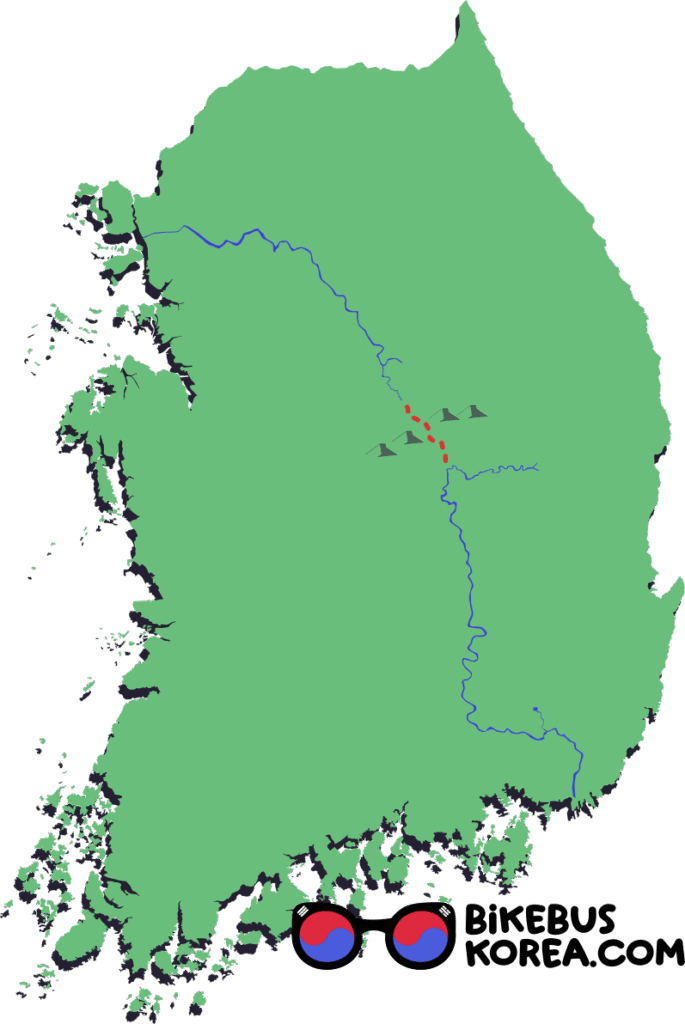
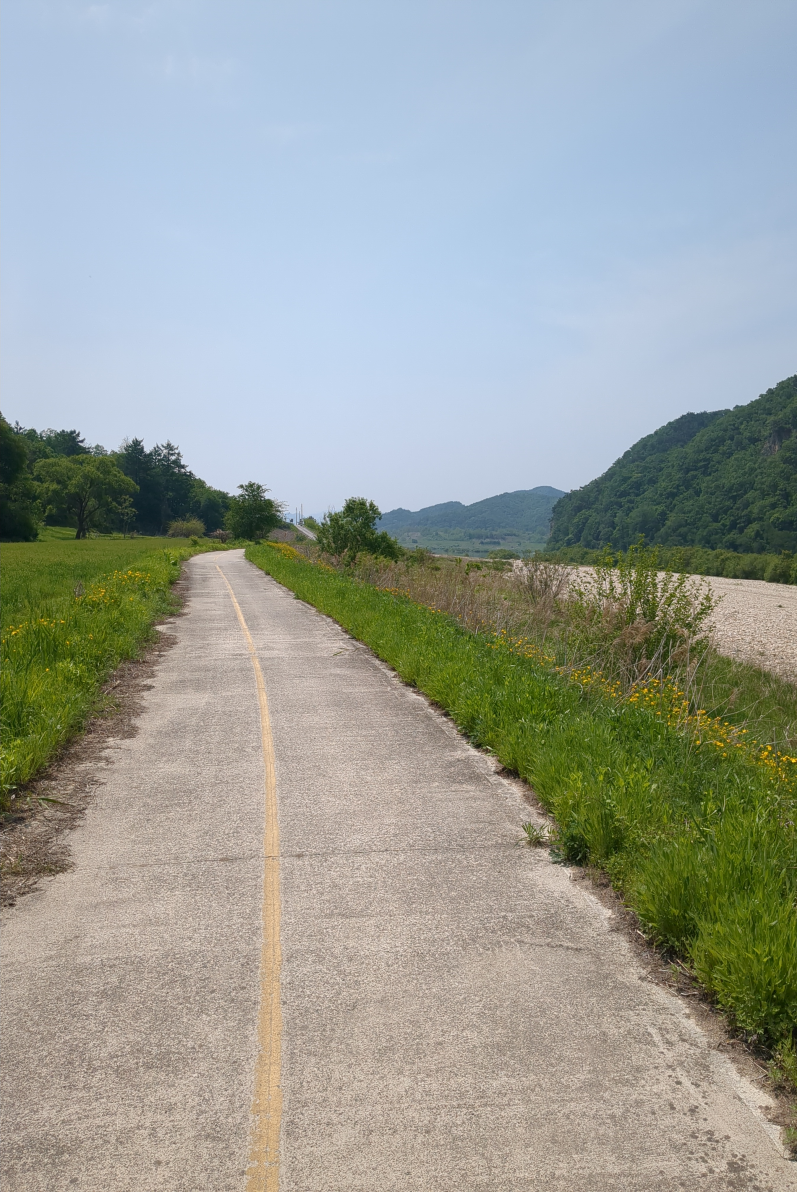
The longest route on Korea’s official cross-country network at 622km, crossing from Incheon in the North West, through Seoul and all the way to Busan in the South East. This route takes you along the Han and Nakdong Rivers and over the Saejae Mountain Pass.
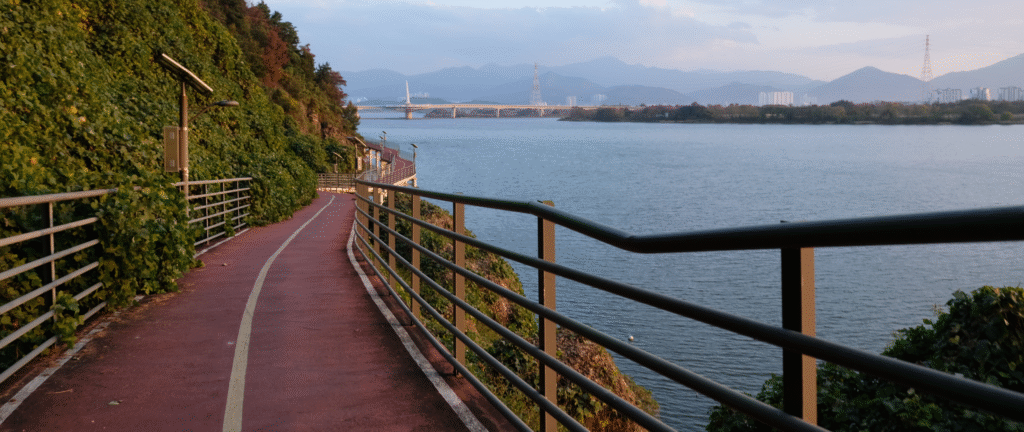
Cycling Incheon to Busan: Route Guide, Maps, Insider Secrets
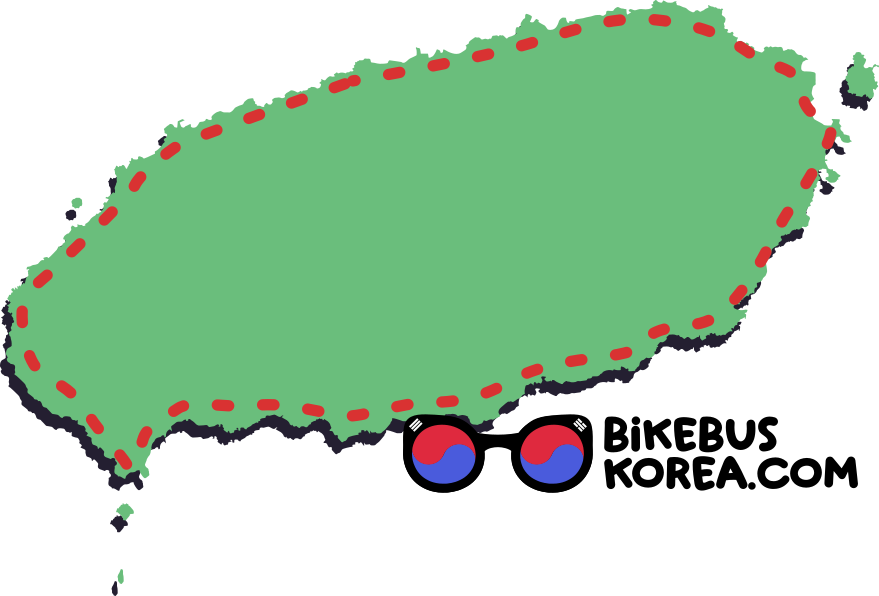
Jeju Island Loop
click for the list of certification centres
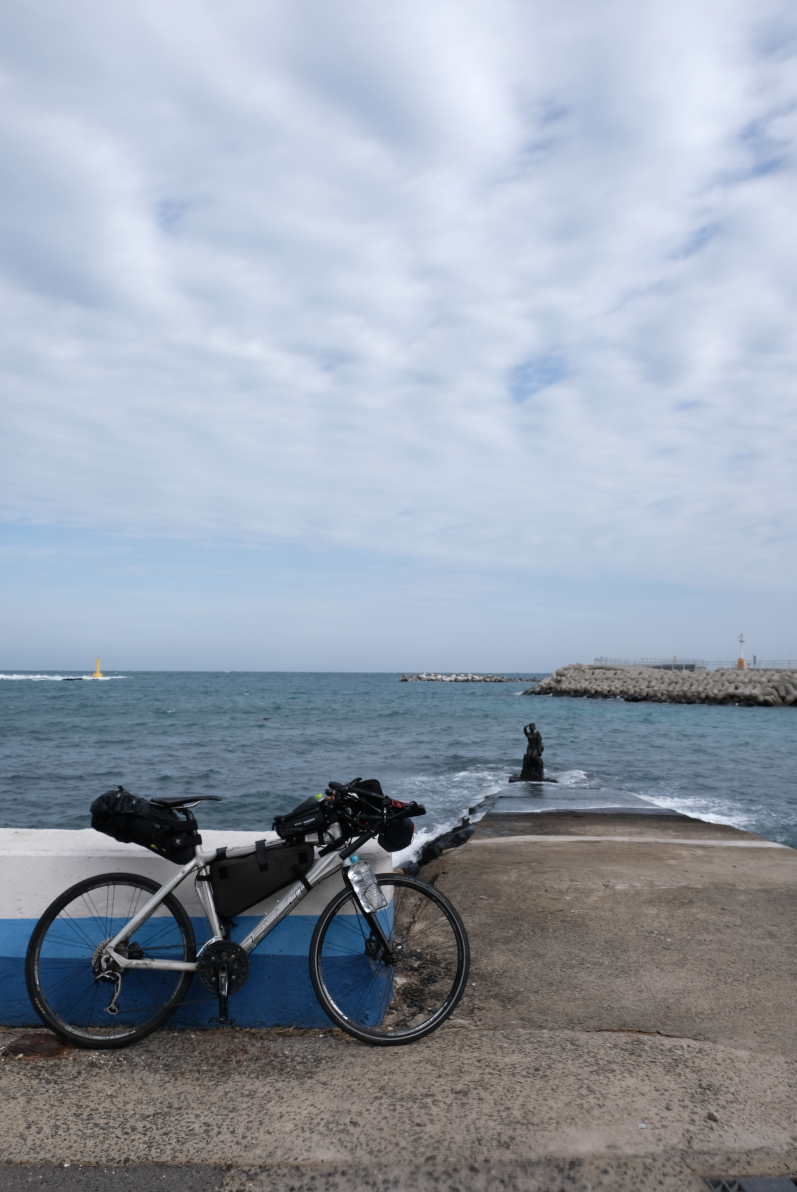
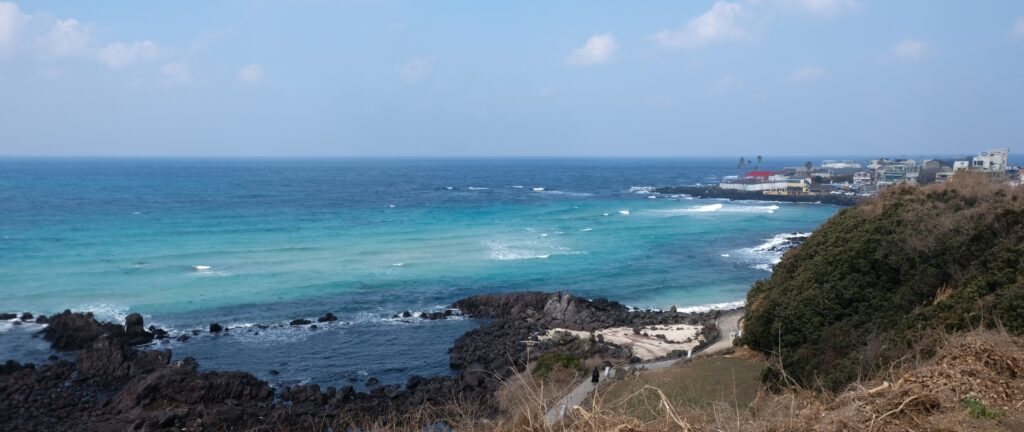
A 230km coastal loop around the sub-tropical Jeju Island known for its 1,947m Halla Mountain, citrus fruit production and white sandy beaches.
This route uses a mixture of coastal and some larger roads, passing by many of the main attractions of the island including the cities of Jeju and Seogwipo.
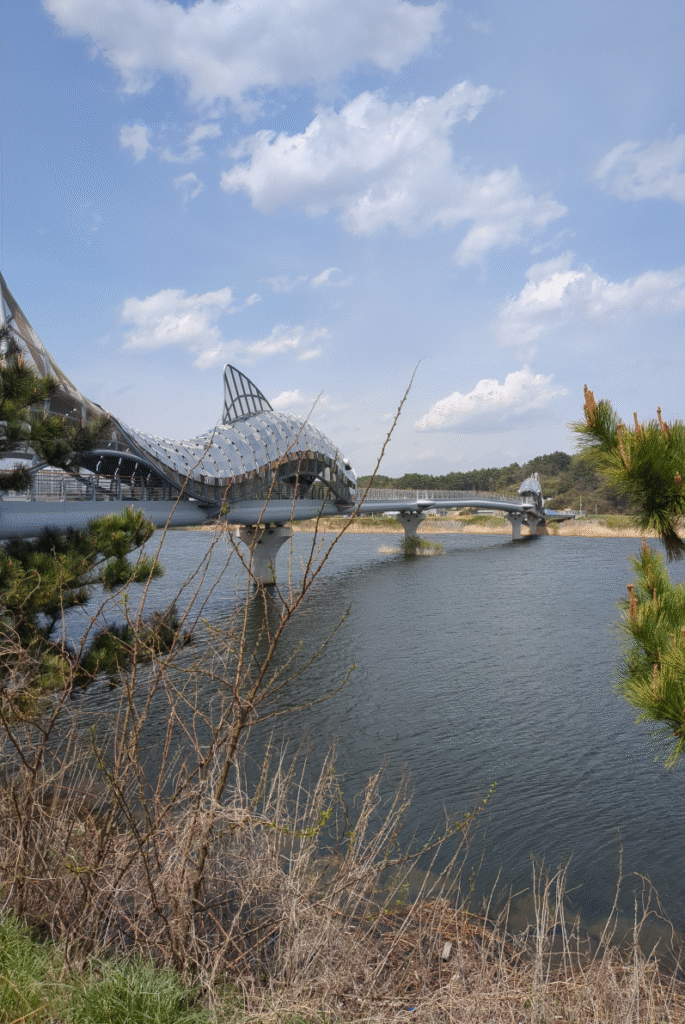
East Coast
click for the list of certification centres
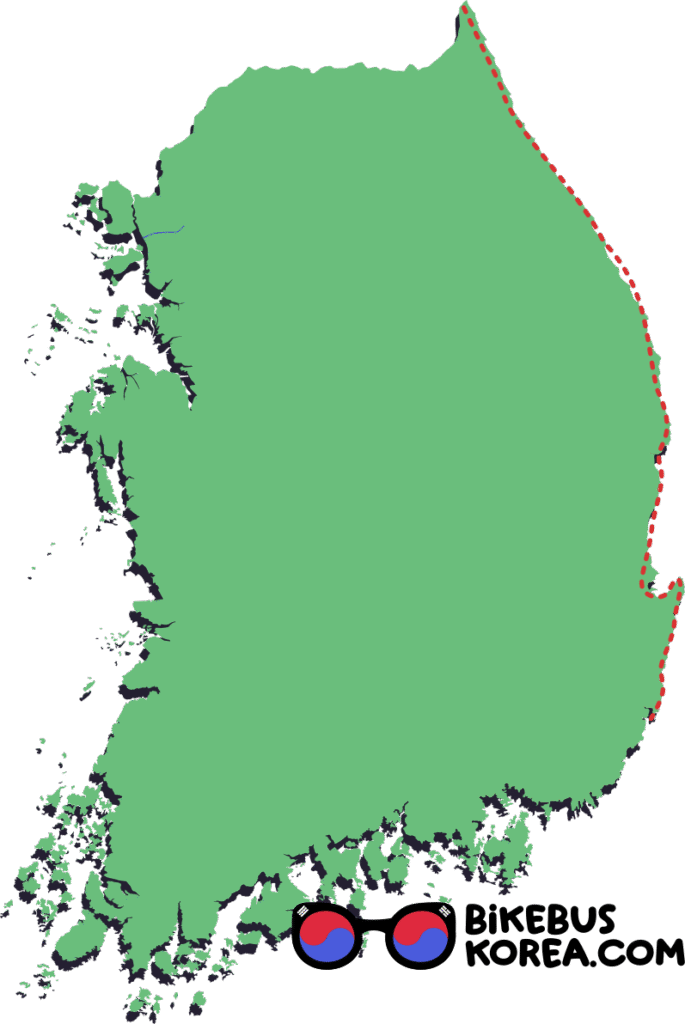
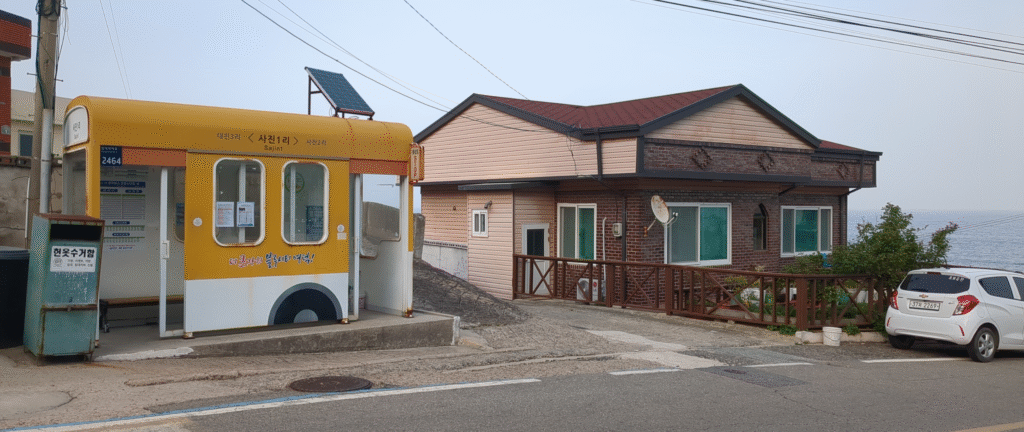
One of Korea’s most beloved places to rest and enjoy the sea. Thanks to a nearby expressway, the winding coastal roads only carry local traffic, making them perfect for cycling.
Be prepared for regular steep ascents throughout Gyeongsang and reward yourself in the thriving beachside cities of Gangwon.
Bikepacking Korea’s East Coast – Route, Tips and Certification
North Han River and Seoul
click for the list of certification centres
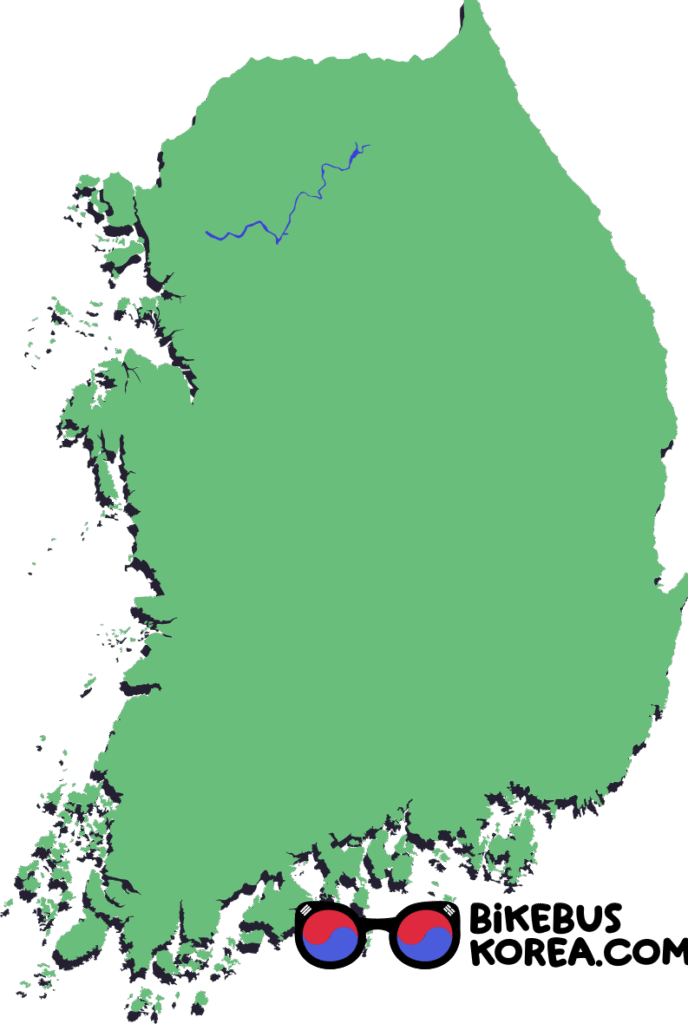
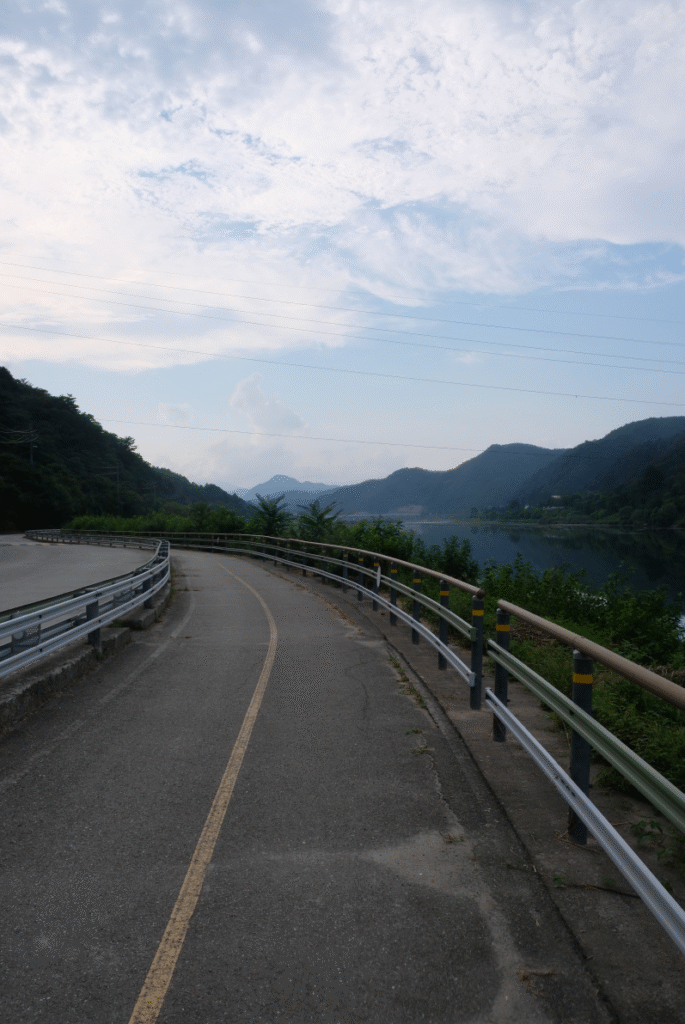
Wend your way from the metropolis to the towering mountain valleys and wild expanses of inland Gangwon Province. The North Han River (Bukhangang) connects Seoul with Chuncheon, a city of 300,000 famous for dakgalbi barbecue chicken.
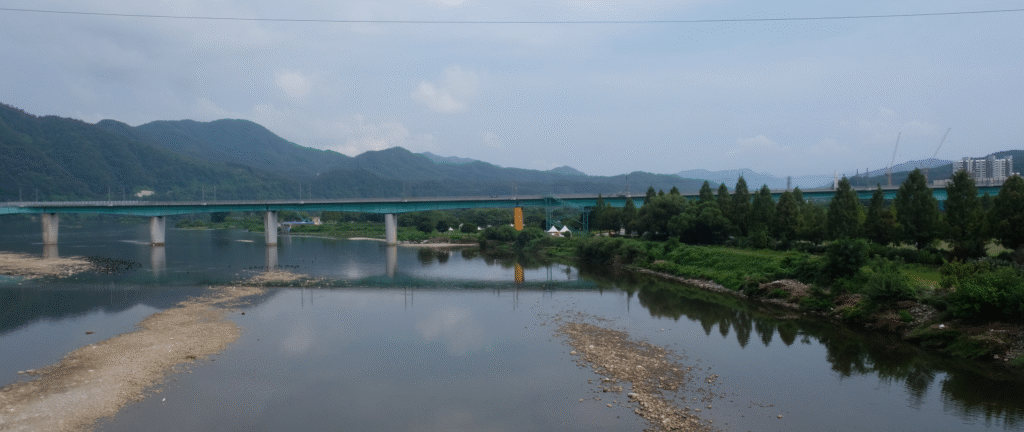
Full-day Rural Cycle trip from Seoul: Insider Secrets of the North Han River
DMZ Peace Trails 1-3
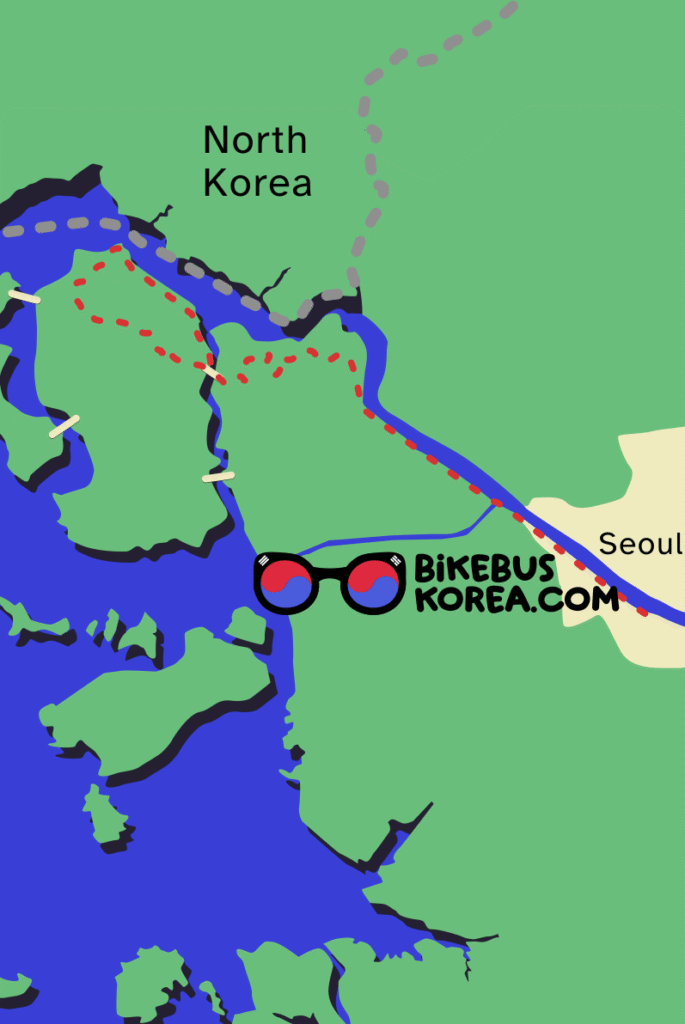
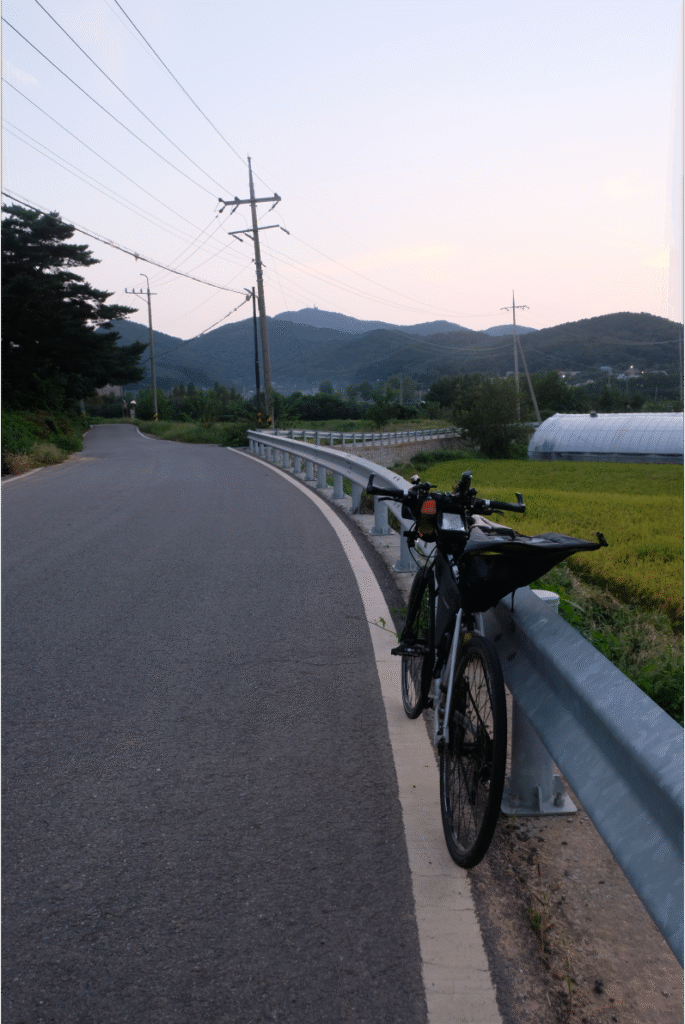
full guide coming soon.
Keep following the Han River northwestwards out of Seoul and you will eventually see North Korea on the opposite bank. This route passes the border observatory at Aegibong and continues onto Ganghwa-do, an island with a unique and rich history.
There are no stamps to collect on the DMZ Peace Trails, but we highly recommend this route to anyone interested in Korean history or seeing beyond the big cities.
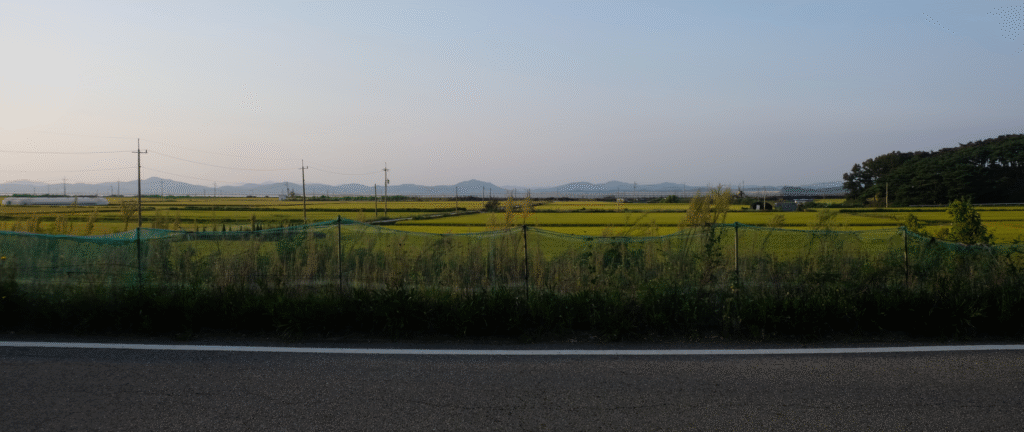
full guide coming soon.
Geum River and Ocheon Stream
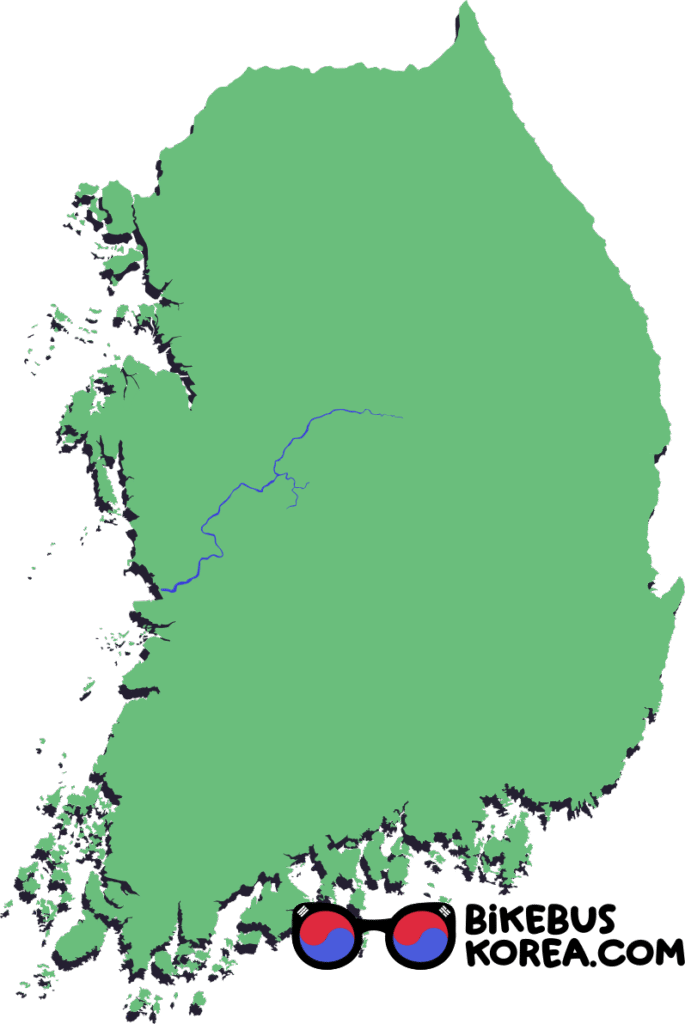
click for the list of certification centres: Geum River and Ocheon
The Geum River and Ocheon Stream together make a route From the Saejae Mountain Pass to Gunsan via Daejeon. The Geum is part of the Four Rivers certification and travels through the heartland of the historical Baekjae Kingdom.
Full guide coming soon.
Yeongsan and Seomjin Rivers
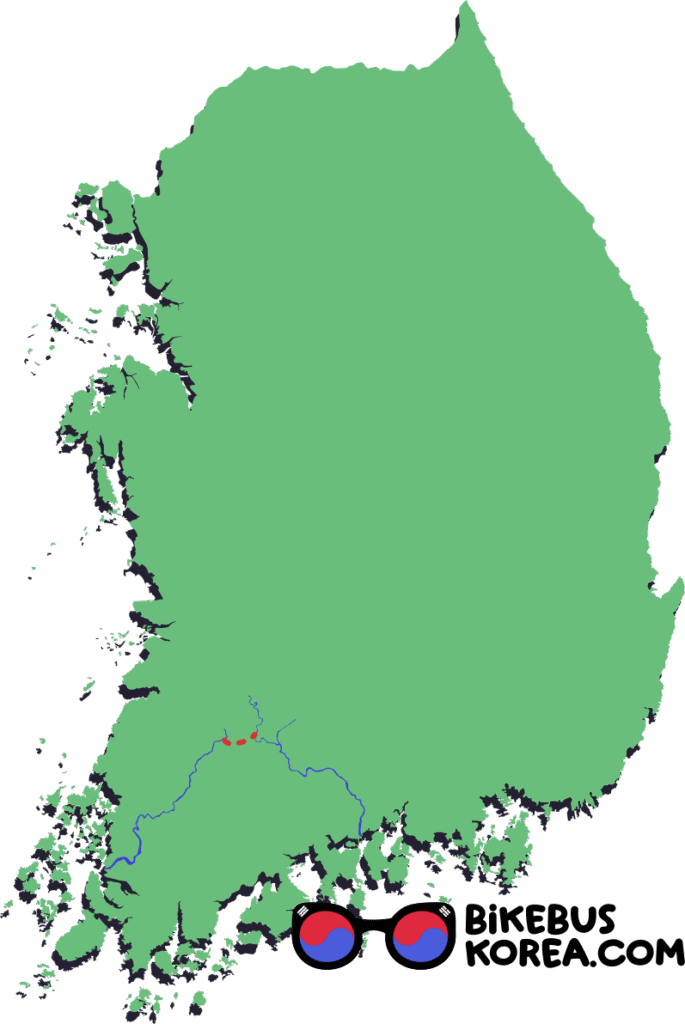
click for the list of certification centres: Yeongsan River
click for the list of certification centres: Seomjin River
The Yeongsan River connects Mokpo, the Southwestern port city with ferry services to Jeju Island, through Gwangju Metropolitain City and up to rural Damyang. The nearby Seomjin River traverses the countryside back towards the South Coast, and the two rivers are connected via a small path.
The Yeongsan River joins the Han, Nakdong and Geum in the Four Rivers certification.
Full guide coming soon.
Navigation
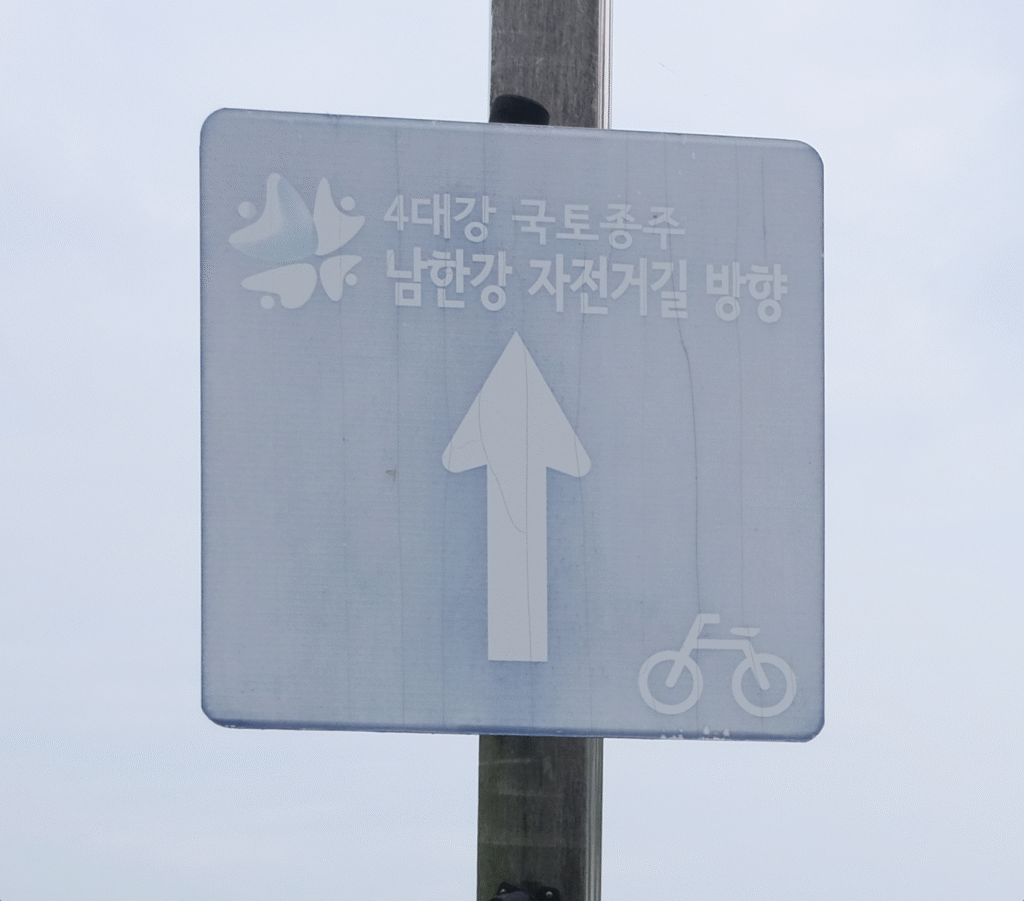
If you follow one of the national cycle roads, you can expect to find it clearly signposted. We recommend using following the signs in conjunction with GPS navigation.
The most reliable route planner in Korea is Naver Map. In our experience it mostly follows the officially designated paths. Where it disagrees with the route signs, Naver is likely to take you a more direct route with heavier traffic.
A drawback of Naver is its poorly functioning English search function. You can get around this by selecting a business or landmark near where you want to go and setting that as your destination. It also helps to type your destination without spaces, for example chuncheonbusterminal.
You can also use maps.me to see the altitude profile of your route, but you won’t find specific businesses or smaller towns listed there.
Certification
Korea’s Ministry of Environment and Ministry of the Interior and Safety have created a certification system: Korea’s Cross Country Cycing Road Tour.
To receive a certificate for completion of certain routes, or just to enjoy collecting stamps, you can buy a Bike Passport stamp book and a network map from a few designated certification centres.
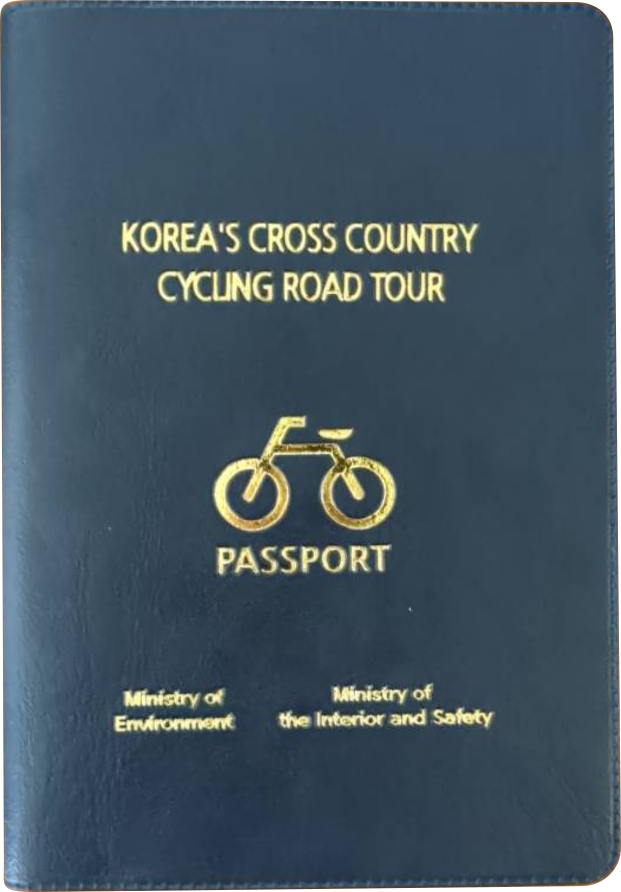
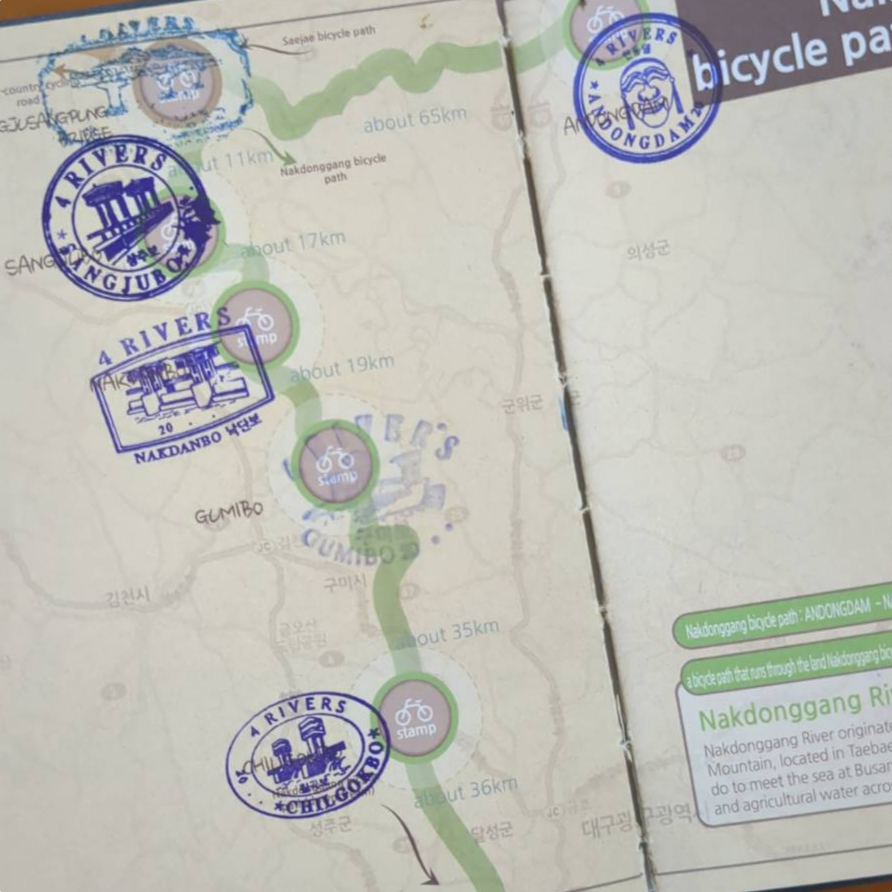
The tour includes riverside and cross-country bike paths as well as quiet coastal roads, along which you will find stamp booths to fill your bike passport.
Where to get the Bike Passport
The most popular route on the official tour covers 622km between Incheon and Busan, and you can buy the stamp book at either end. Click for map links to the staffed certification centre in Incheon or Busan.
Most staffed certification centres are open from 09:00 to 17:30 with Mondays off. The Incheon centre is open every day.
It is not possible to buy the passport on Jeju Island, but you can receive course completion certificates at Yongduam Jeju Tourist Information Centre.
Accommodation
We are not affiliated with any accommodation platform.
Travelling by bike often leaves you needing to find accommodation in towns that don’t receive many tourists, especially from abroad.
There are three main options for finding accommodation:
- Rely on foreign platforms (fewer options, maybe higher price)
- Use Korean platforms (usually Korean-language-only and requiring a Korean bank account, e.g. Yanolja)
- Search Naver or Kakao Maps for hotels and pay on arrival
Foreign platforms like Booking.com do work even in the countryside, but they don’t list all the available options.
Korean platforms are reliable and show most available accommodation, but require knowledge of Korean and usually don’t accept international payments.
Paying on arrival could leave you needing a plan B if somewhere is fully booked or closed, but allows you access to hotels that don’t appear even on Korean platforms.
Hotels not listed on Korean platforms are likely to be older and more basic.
It’s also possible use Korean sites to find places and check prices, then pay on arrival if you aren’t able to pay through the platform.
We can also help you to find accommodation if you contact us for a travel consultation.
Hostels and Cheap Accommodation in Korea
Hostels are relatively rare in Korea, but they are available in Seoul, Busan and Jeju Island. You might have more luck finding them with the search term ‘guest house’.
Motels are more widely available and affordable, with prices outside of Seoul usually between 30,000-60,000KRW. This can go up at the weekend.
Camping in South Korea
Camping gives you ultimate freedom to adjust each day’s distance as you go. However, we advise against camping in urban areas, national parks or forests to avoid disturbance from park authorities or wild boar.
You often pass by pavillions which can be good for camping.
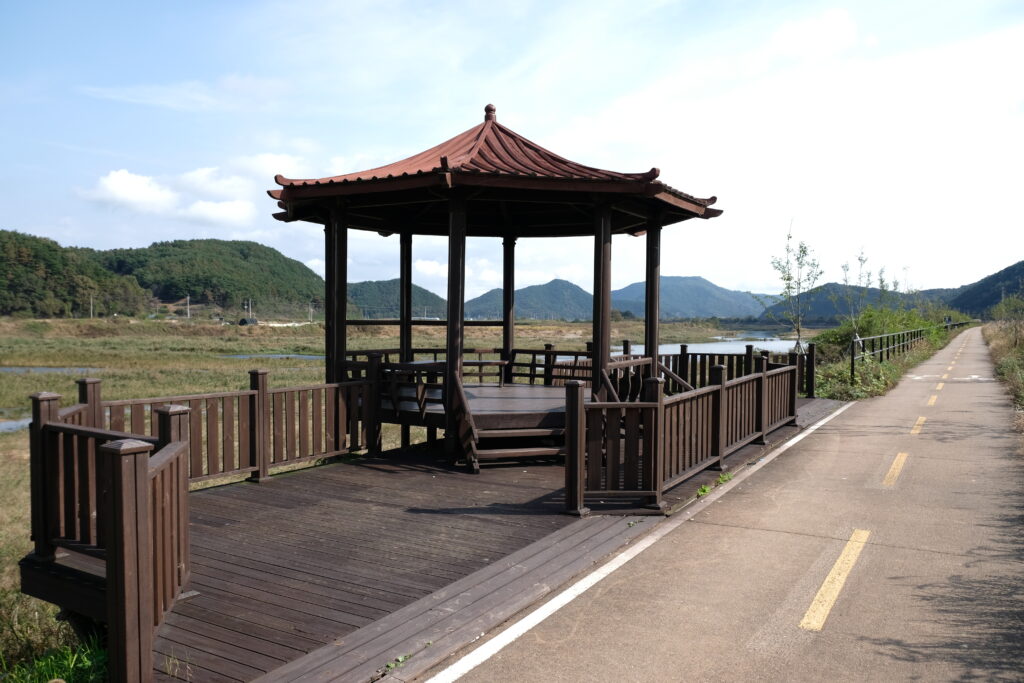
The weather is best during Spring and Autumn (March to May, September and October). Winter in South Korea brings temperatures below -15°C while Summer can be extremely humid.
Still need help?
Get in touch for personal advice and support here.